
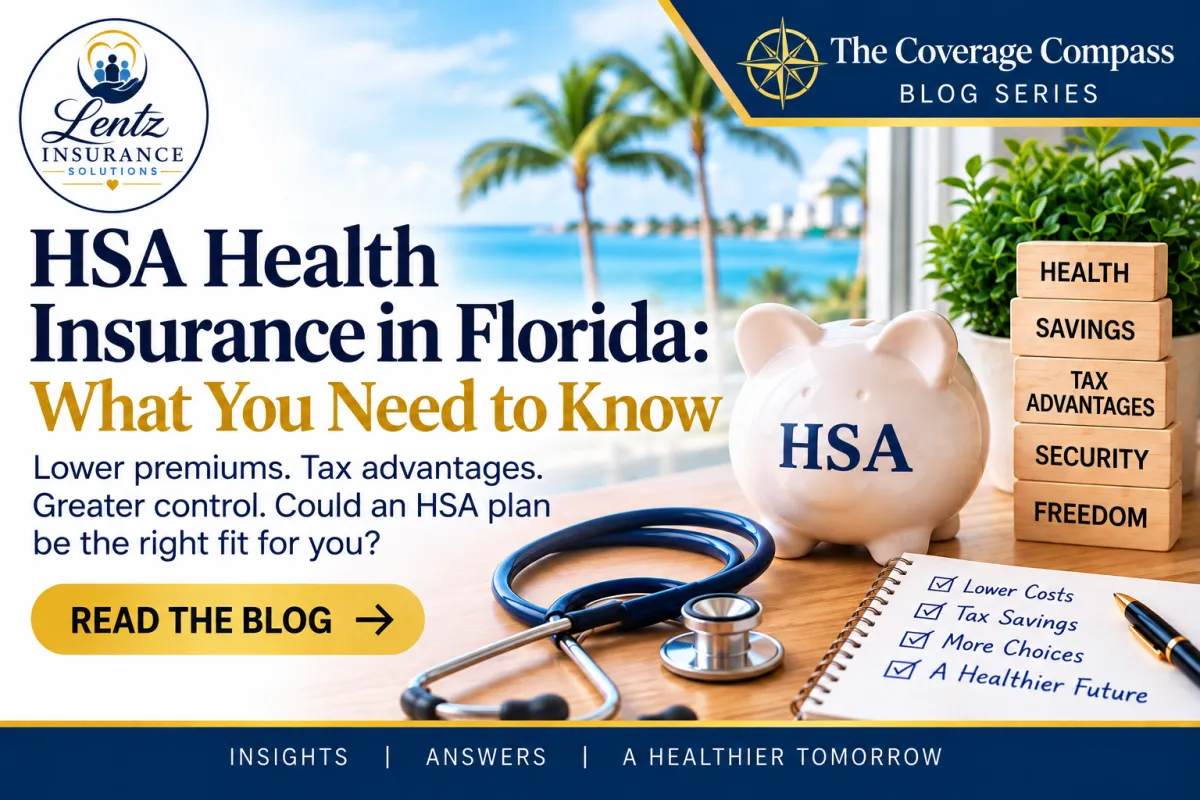
HSA Health Insurance in Florida: What You Need to Know
Health Savings Accounts (HSA) and Health Insurance in Florida: What You Need to Know
If you're shopping for health insurance, you've probably heard the term HSA—but what exactly is a Health Savings Account, and how does it work with your health insurance?
For many Florida individuals, families, and self-employed professionals, an HSA can be an important part of a healthcare strategy.
But an HSA isn't health insurance itself.
It's a tax-advantaged savings account that can be used to help pay for qualified medical expenses when paired with an HSA-eligible health plan.
Understanding how the two work together can help you make a more informed decision when comparing health insurance options.
What Is a Health Savings Account?
A Health Savings Account (HSA) is a personal savings account that allows eligible individuals to set aside money on a tax-advantaged basis to pay for qualified medical expenses.
HSA funds can generally be used for eligible expenses such as deductibles, copayments, coinsurance, and certain dental and vision expenses. Money that you don't use generally stays in the account and can carry forward from year to year.
Unlike a health insurance policy, an HSA doesn't pay your medical provider or replace your insurance coverage.
Instead, think of it as a separate financial tool that can help you manage the out-of-pocket costs associated with eligible health insurance coverage.
You Need an HSA-Eligible Health Plan
You can't simply open an HSA and automatically receive all of its tax benefits.
To contribute to an HSA, you generally need to meet IRS eligibility requirements, including being covered by an HSA-eligible high-deductible health plan and not having disqualifying coverage.
This is why it's important to look at the health insurance plan and the HSA together.
A health plan may have a lower monthly premium but a higher deductible. An HSA can potentially help you set aside money to handle eligible healthcare expenses that occur before you reach your deductible.
An Important Change for 2026
There is an important development for people shopping for Marketplace coverage in 2026.
HealthCare.gov states that all 2026 Bronze and Catastrophic Marketplace plans are HSA-eligible, although Catastrophic plans aren't available to everyone or in every area.
That means more consumers may have the opportunity to combine certain Marketplace health plans with an HSA.
This is especially worth understanding if you're comparing plans based on both monthly premium and total healthcare costs.
How Does an HSA Work With Your Health Insurance?
Here's a simplified example.
Imagine you select a health plan with:
A relatively lower monthly premium
A higher deductible
HSA eligibility
You can then contribute money to an HSA if you're eligible.
When you have an eligible medical expense, you can potentially use money from the HSA to help pay the expense.
The strategy can look something like this:
Health insurance
Protects you against covered healthcare expenses and provides access to the plan's benefits and network.
HSA
Provides a tax-advantaged way to save for qualified medical expenses.
Together, they can be an effective way for some people to manage both insurance premiums and healthcare spending.
Why Might an HSA Be Attractive to Self-Employed Floridians?
An HSA can be particularly interesting to people who are comfortable taking on a higher deductible in exchange for potentially lower premiums.
If you're self-employed and comparing your health insurance choices, our guide to Health Insurance for the Self-Employed in Florida offers a closer look at your options.
That can include:
Self-employed professionals
Independent contractors
Realtors
Consultants
Freelancers
Healthy individuals
Small-business owners
However, "healthy" doesn't automatically mean an HSA-eligible high-deductible plan is the right choice.
You still need to consider your expected healthcare usage, prescription needs, preferred doctors, deductible, out-of-pocket maximum, and ability to cover unexpected medical expenses.
What Are the Potential Tax Advantages?
HSAs can offer several tax advantages for eligible individuals.
Contributions may be tax-deductible, money in the account can generally grow tax-free, and withdrawals used for qualified medical expenses can generally be tax-free.
That's one reason HSAs are sometimes described as having a "triple tax advantage."
However, there are rules governing eligibility, contributions, withdrawals, and qualified expenses.
If you're considering an HSA as part of your financial strategy, it's wise to discuss the tax implications with your tax professional.
What Happens to the Money If You Don't Use It?
One of the attractive features of an HSA is that unused money generally rolls over from year to year.
Unlike some accounts where you may have to spend the balance within a specific period, HSA funds generally remain available for future qualified medical expenses.
Your HSA is also your account.
That means the money isn't simply tied to one year's healthcare expenses.
HSA vs. FSA: What's the Difference?
People sometimes confuse HSAs with Flexible Spending Accounts (FSAs).
They're different types of accounts with different eligibility rules and characteristics.
An HSA is generally associated with an HSA-eligible high-deductible health plan, while an FSA is generally an employer-sponsored benefit.
If you're self-employed, an HSA may be particularly relevant because you may not have access to the same employer-sponsored benefits that employees receive.
Does an HSA Pay My Health Insurance Premium?
Generally, no.
HSA funds are generally intended for qualified medical expenses, not monthly health insurance premiums. There are limited exceptions under specific circumstances, so it's important to understand the rules before using HSA funds for premiums.
This is an important distinction:
Your health insurance premium pays for your insurance coverage.
Your HSA helps you pay eligible healthcare expenses.
They work together, but they serve different purposes.
How Much Should You Put Into an HSA?
There isn't one answer that works for everyone.
Your contribution strategy should consider:
Your income
Your monthly budget
Your deductible
Your expected healthcare expenses
Your emergency savings
Your tax situation
Your annual HSA contribution limit
You don't necessarily have to contribute the maximum amount.
The goal is to develop a strategy that fits your overall financial situation.
What Should You Look At When Comparing HSA-Eligible Plans?
Don't choose a health plan simply because it says "HSA eligible."
Look at the entire picture.
Compare:
Monthly Premium
How much will you pay every month for coverage?
Deductible
How much will you generally have to pay for covered services before the plan begins paying according to its terms?
Out-of-Pocket Maximum
What's the most you could be responsible for during the plan year for covered services under the plan's rules?
Provider Network
Are your doctors, hospitals, and specialists included?
Prescription Coverage
Are your medications covered, and what will they cost?
HSA Eligibility
Is the plan actually eligible for HSA contributions under the current rules?
Total Expected Cost
Don't look only at the premium.
Consider the combination of:
Premium + healthcare expenses + deductible + coinsurance/copays + potential HSA contributions
That's a much better way to compare your overall financial exposure.
Is an HSA Right for Everyone?
No.
And that's an important point.
An HSA-eligible plan may be attractive for someone who wants a lower premium and is comfortable with a higher deductible.
But someone who expects frequent medical care, has significant ongoing prescription costs, or isn't comfortable with a high deductible may prefer a different type of health plan.
The right answer depends on your circumstances.
The Bottom Line
A Health Savings Account can be a powerful healthcare financial tool—but it shouldn't be the reason you choose a health insurance plan.
Start with the insurance coverage.
Look at the network.
Understand the deductible.
Review the out-of-pocket maximum.
Consider your prescriptions and expected healthcare needs.
Then determine whether an HSA-eligible plan and HSA strategy make sense for you.
For Florida individuals and self-employed professionals, understanding how these pieces fit together can make comparing health insurance much easier.
The goal isn't simply to find the lowest monthly premium.
It's to find a combination of coverage and financial strategy that makes sense for your life.
Need Help Understanding Your Options?
Every person's situation is different.
Whether you're self-employed, an independent contractor, a Realtor, or simply comparing individual health insurance options, understanding how premiums, deductibles, networks, and HSAs work together can help you make a more informed decision.
The Coverage Compass is here to help you navigate those decisions with confidence.
At Lentz Insurance Solutions, my goal is to help you understand your options—not pressure you into a particular plan.
Let's talk through your options with confidence.
Becky Lentz
Independent Health Insurance Broker
Helping you protect what matters most—with guidance and trust.
This article is for educational purposes only and is not tax, legal, or financial advice. HSA eligibility, contribution limits, qualified expenses, and health insurance plan rules are subject to federal requirements and can change. Consult a qualified tax professional regarding your individual tax situation.

Becky Lentz
Compare Health Insurance Plans

Not sure which health plan is right for you? As an independent health insurance broker with 25+ years of experience, I'll help you compare plans from top carriers and find coverage that fits your needs, budget and preferred doctors—all at no cost to you.
You'll work directly with me—not a call center—and I'll help you make an informed decision with no pressure or obligation.

About Us
Helping You To
Manage Your Health Insurance Needs!
With 25+ years of experience, I help individuals, families, self-employed professionals and small businesses compare health insurance options with honest, personalized guidance. As an independent broker, I work for you—not the insurance company.
Becky Lentz
Licensed Independent Health Insurance Broker
8235758
Everything You Need To Know About Health Insurance At A Glance
What Is Health Insurance?
Health insurance is designed to make medical care more affordable and accessible, helping individuals and families manage healthcare costs and get the coverage they need. Today’s plans offer a range of options to suit different budgets, health needs, and lifestyles.
Important Details
Unlike government marketplace plans with strict deadlines, health insurance plans are available year-round. You can compare options and enroll at any time, making it easy to get coverage when you need it most.
Reviews
Real-Life Testimonials
From Satisfied Clients
Judy K.
Becky is wonderful to work with!! She has helped me for many years providing me the best insurance policies and rates!! I highly recommend Becky!
Gina E.
Becky is THE BEST!!! I found myself in a situation where my insurance simply wasn't covering my needs. She did the research and found me several alternatives that provided everything I needed and more! I can recommend her without reservation!
Shelby R.
Having been on the commercial side of health care for almost 30 years, I knew when I would find the right agent to assist me, for the first time in my life, with individual health care coverage. With Becky, I did just that. She is knowledgeable, answered all of our questions, offered great guidance and advice. If you are thrown into the world of individual health care coverage, it is daunting! Becky can walk you through every step with ease!

More Info
Important Questions
What Should I Budget for Health Insurance?
The cost of health insurance varies based on your age, location, family size, and the type of plan you choose. You’ll want to think about the monthly premium you’ll pay to keep your coverage, the deductible you need to meet before insurance starts paying, and the copays or coinsurance you’ll share for doctor visits, prescriptions, and other care. Each plan also has an out-of-pocket maximum, which is the most you’ll spend in a year before your insurance covers everything else. Keeping these factors in mind will help you find a plan that protects your health without breaking your budget.
Can I Work with My Preferred Doctor?
Yes, in many cases you can — but it depends on the type of health insurance plan you choose. Some plans, like PPOs, give you more flexibility to see doctors and specialists both in and out of network, while others, like HMOs, require you to stay within a specific network of providers. To make sure you can continue seeing your preferred doctor, always check whether they are included in your plan’s network before enrolling.
Prescription Drug Needs
Make sure the plan you select provides the coverage you need for your prescriptions. If you’re not sure which option is right for you, our licensed experts are here to help — schedule a free consultation call below and we’ll guide you to the plan that best fits your needs.
I Need Help Paying for Health Insurance
If paying for health insurance feels overwhelming, you’re not alone. The good news is there are affordable options available. Many plans are designed with flexible payment choices, lower monthly premiums, or cost-sharing features to help keep coverage within reach. Our licensed experts can walk you through your options, compare plans side by side, and help you find one that fits both your healthcare needs and your budget.
How do I Sign Up?
For more detailed information and personalized assistance, schedule an appointment with me today. I can guide you through the process, help you understand your options, and ensure you find a plan that meets your needs and budget. Schedule an appointment now to get started on securing your health insurance coverage.
Looking for a First-Class Health Insurance Consultant?
Lentz Insurance Solutions is committed to serving you at the highest level with all your Healthcare needs.
National Producer Number: 8235758
Company
Directories
Legal
Lentz Insurance Solutions is committed to serving you at the highest level with all your Healthcare needs.
National Producer Number: 8235758
Company
Directories
Legal